

Is Cyprus becoming the next Ibiza?
A 15-year property high, surging international demand, and a market still ahead of the curve


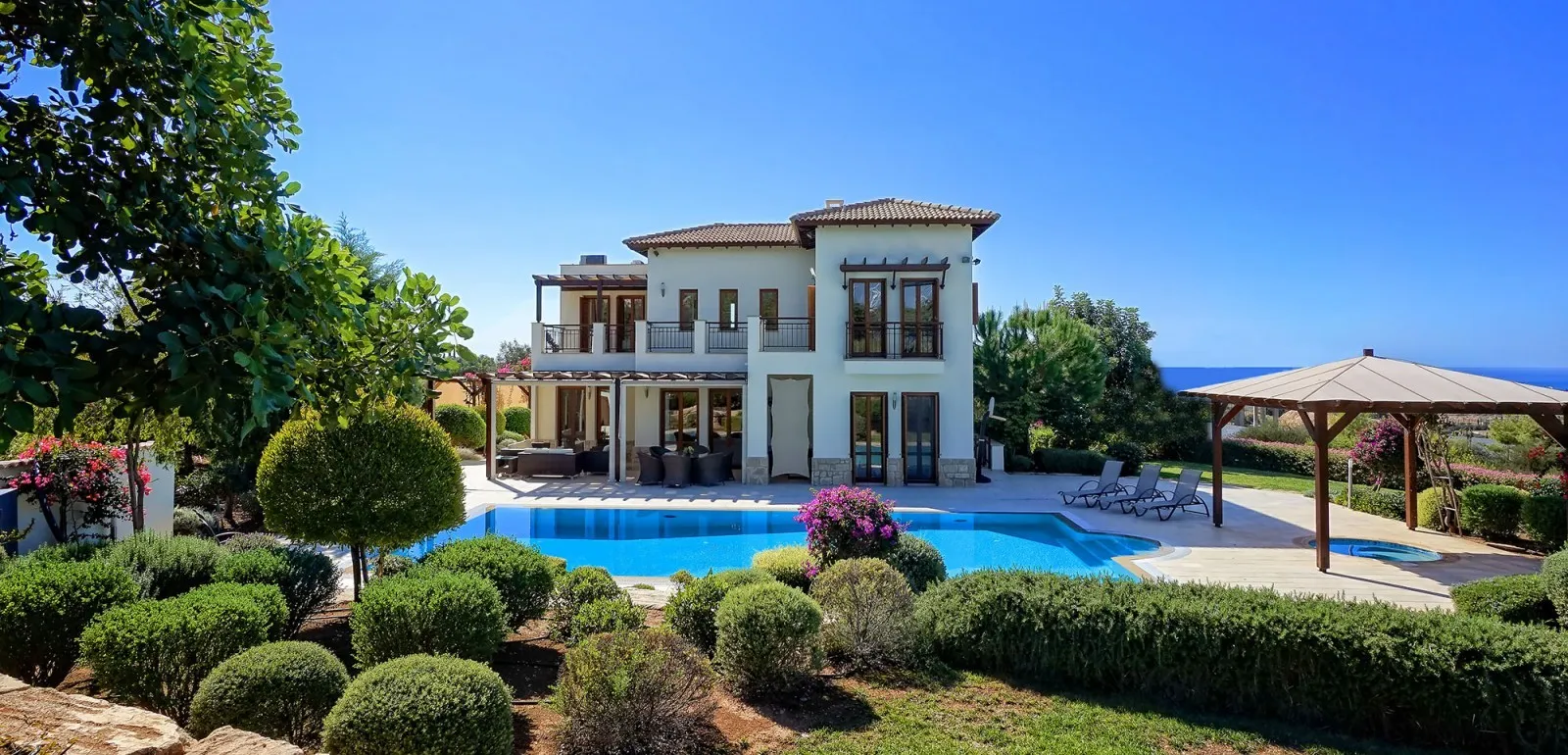
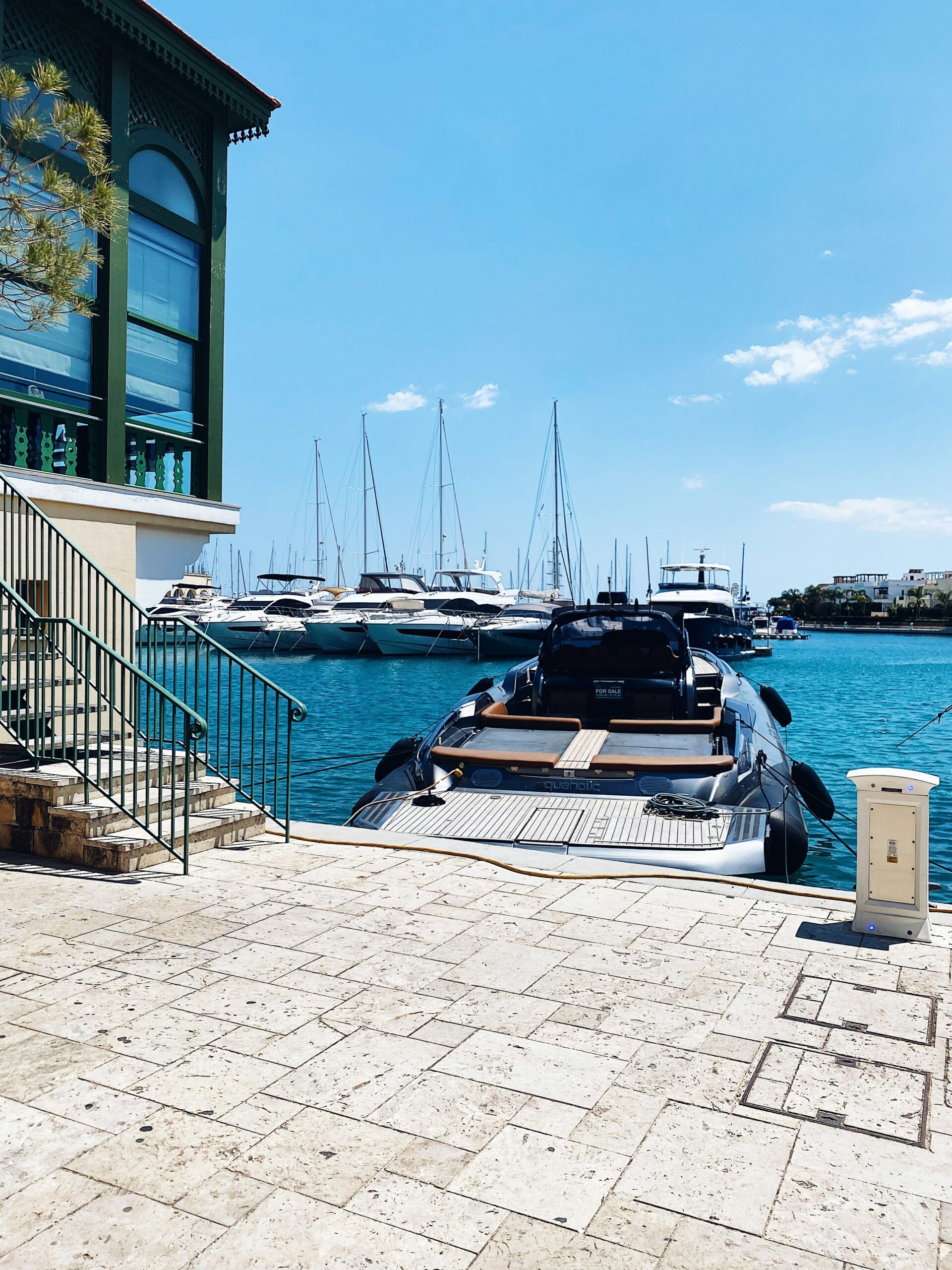



Is Cyprus about to have its Ibiza moment?
International interest is surging, and the property market hasn’t caught up yet. Recent transaction data suggests that the comparison is no longer rhetorical.
In 2025, Cyprus’s property market reached activity levels not seen in more than 15 years, surpassing even the pre-financial-crisis peaks of 2007. The second quarter of the year marked a clear inflection point. Sales contracts rose by roughly 16 percent year on year, pushing transaction volumes to their highest level since the mid-2000s boom.
This momentum builds on a sustained post-pandemic upswing rather than a single extraordinary quarter. May 2025 alone recorded 1,664 property sales, the busiest month in 17 years and around 30 percent higher than May 2024. By mid-year, total transaction value had reached €2.3 billion, an 11 percent increase over the previous year. In a European context where many residential markets are stagnating or correcting, Cyprus stands out for both the scale and durability of its recovery.
What is driving this boom is not one dominant factor, but a convergence of demand sources. Domestic buyers, supported by a growing economy, low unemployment, and improving consumer confidence, remain the backbone of the market and account for roughly 60 percent of purchases. At the same time, international demand has returned with force, attracted by Cyprus’s lifestyle appeal, legal clarity, and EU positioning. In Q2 2025, sales contracts rose by more than 15 percent among domestic buyers and by almost 18 percent among foreign buyers.
“Cyprus feels like Ibiza 30 years ago,” says Dr. Björn Bronger. The comparison is not nostalgic. It is structural. International visibility is rising quickly, supply remains constrained, and yet the market is still at a stage where selection and discipline matter more than momentum. That combination is rare, and it is what makes the current moment in Cyprus worth examining closely.
Transaction volumes surging across all regions
A defining feature of the current cycle is its breadth. Unlike earlier booms, growth is not confined to one city, one asset class, or one buyer group. All districts are participating, each with distinct dynamics that together form a more resilient national market.
Limassol continues to dominate in value terms. In 2025, property transfers reached approximately €1.7 billion, up from €1.5 billion the year before. Interestingly, the number of transactions dipped slightly while total value increased. Fewer properties changed hands, but at higher price points. This pattern suggests a market that is maturing, with a growing focus on quality, prime locations, and long-term positioning rather than speculative volume.
Nicosia, by contrast, recorded strong growth in transaction volume. More than 5,900 transfers were completed in 2025, compared with around 5,400 the previous year. Sales contracts increased by roughly 17 percent, pushing total transaction value beyond €1 billion for the first time. This reflects renewed domestic confidence and reinforces Nicosia’s role as the anchor of local demand, particularly among Cypriot end-users.
Larnaca and Paphos also posted significant gains. Larnaca benefited from its positioning as a more accessible coastal market, with sales contracts rising by nearly 20 percent and transaction values approaching €700 million. Paphos saw a similar increase in units sold, although total transaction value edged slightly lower, suggesting a shift toward smaller or mid-market properties rather than large luxury homes.
Even Famagusta participated in the upswing. Sales and transaction values rose in areas such as Ayia Napa and Protaras, supported by tourism-driven development and infrastructure investment.
Nationally, sales contracts exceeded 18,000 in 2025, around 15 percent higher than in 2024. This marks the strongest year for Cyprus property transactions since 2007. Crucially, growth is geographically balanced, reducing the risk of isolated overheating and reinforcing the sense that the market has entered a more mature phase.
Prices climbing, led by apartments
Strong transaction activity has been accompanied by steady price appreciation, particularly in the apartment segment. According to the Central Bank of Cyprus, apartment prices rose by around 5.3 percent year on year in Q2 2025. House prices increased by roughly 3.4 percent over the same period.
Quarterly data highlights the divergence even more clearly. Apartment prices rose by more than 3 percent in Q2 alone, while single-family house prices were broadly flat. Demand is clearly tilting toward apartments, driven by affordability considerations, rental demand, and ease of ownership, particularly among international buyers and younger professionals.
The national apartment price index has now surpassed its pre-2008 peak, underscoring how decisively this segment has recovered from the post-crisis downturn. House prices, by contrast, remain below earlier highs in many regions. This reflects both supply constraints and shifting buyer preferences. New apartments in central or coastal locations remain scarce, while houses show more varied performance depending on location, age, and energy efficiency.
What’s driving demand? A changing buyer mix
The buyer base today is broader, more international, and more informed than in previous cycles. Domestic purchasers have returned in force, supported by rising incomes, low unemployment, and conservative mortgage lending standards that limit excessive leverage.
Foreign buyers account for roughly 40 percent of transactions. Within this group, non-EU buyers now form the majority. Many are attracted by Cyprus’s permanent residency programme. Others are motivated by business relocation, tax planning, or the search for a stable European base amid geopolitical and economic uncertainty elsewhere.
Paphos and Limassol attract the highest share of international buyers, while Nicosia remains overwhelmingly domestic. Larnaca and Famagusta show a more balanced profile, combining local demand with a growing international presence.
Motivations have become increasingly pragmatic. Buyers are not simply chasing lifestyle, but evaluating rental yields, liquidity, and long-term fundamentals. Cyprus remains competitively priced compared with other Mediterranean markets, while offering solid yields and a stable macroeconomic backdrop.
Supply constraints and the limits of new construction
Despite rising demand, housing supply has not caught up. Construction activity declined sharply in the 2010s and is only gradually recovering. Permits are increasing, but high construction costs, labour shortages, and cautious developer behaviour limit the pace of delivery.
Developers favour smaller, phased projects and higher-margin segments. As a result, quality properties are often absorbed quickly, sometimes before completion. Rental markets have tightened accordingly, particularly in Limassol and Nicosia, reinforcing upward pressure on prices.
Most forecasts point toward stabilisation rather than reversal. Growth is expected to continue, but at a more sustainable pace as supply slowly increases and financing conditions remain disciplined.
A maturing market and a shift in risk
The current cycle differs fundamentally from earlier booms. Lending standards are conservative, data transparency has improved, and legal frameworks are stronger. Systemic risk is lower, but selectivity matters more than ever.
Risk and opportunity now depend on asset quality, location, and developer credibility. The market increasingly rewards informed, patient capital rather than speculative speed.
How Bronger Peters approaches the market
Bronger Peters operates with a continuous market and developer scan. We monitor transaction patterns, pricing behaviour, planning pipelines, and developer track records across Cyprus, combining on-the-ground intelligence with data-driven analysis.
Our role is not volume-driven. We act as a strategic advisory and local execution partner, supporting clients through selection, due diligence, and transaction structuring. The objective is clarity, not momentum.
So, is Cyprus the next Ibiza?
Cyprus may resemble Ibiza 30 years ago not because of lifestyle parallels, but because of where it sits in its market cycle. International awareness is accelerating, supply remains structurally constrained, and yet pricing has not fully converged with more established Mediterranean markets.
That does not mean Cyprus will follow Ibiza’s path exactly. Markets evolve differently, shaped by policy, infrastructure, and economic structure. What it does suggest is that Cyprus is transitioning from an emerging opportunity to a more globally recognised property market.
So, is Cyprus the next Ibiza?
The more precise answer may be this: Cyprus is at the stage Ibiza once was, when timing, selection, and clarity mattered most.

Contact
Contact us to arrange a free explanatory call or to receive more information.